2 out of 3 patients
who complete TMS
achieve remission*
Learn More - *Source: BrainsWay Deep TMS real-world clinical data
2X
Patients who failed 2 antidepressants are 2x more likely to achieve remission with TMS*
Read the data - * Source: BrainsWay Deep TMS real-world clinical data.
~80%
"Dr. Roth’s support and TMS treatments have been huge. Through the work we've done together, especially during the time I was pregnant, I've been able to be more grounded and regulated - which is everything, especially as a parent.”
Jasmine
What Is TMS Therapy?
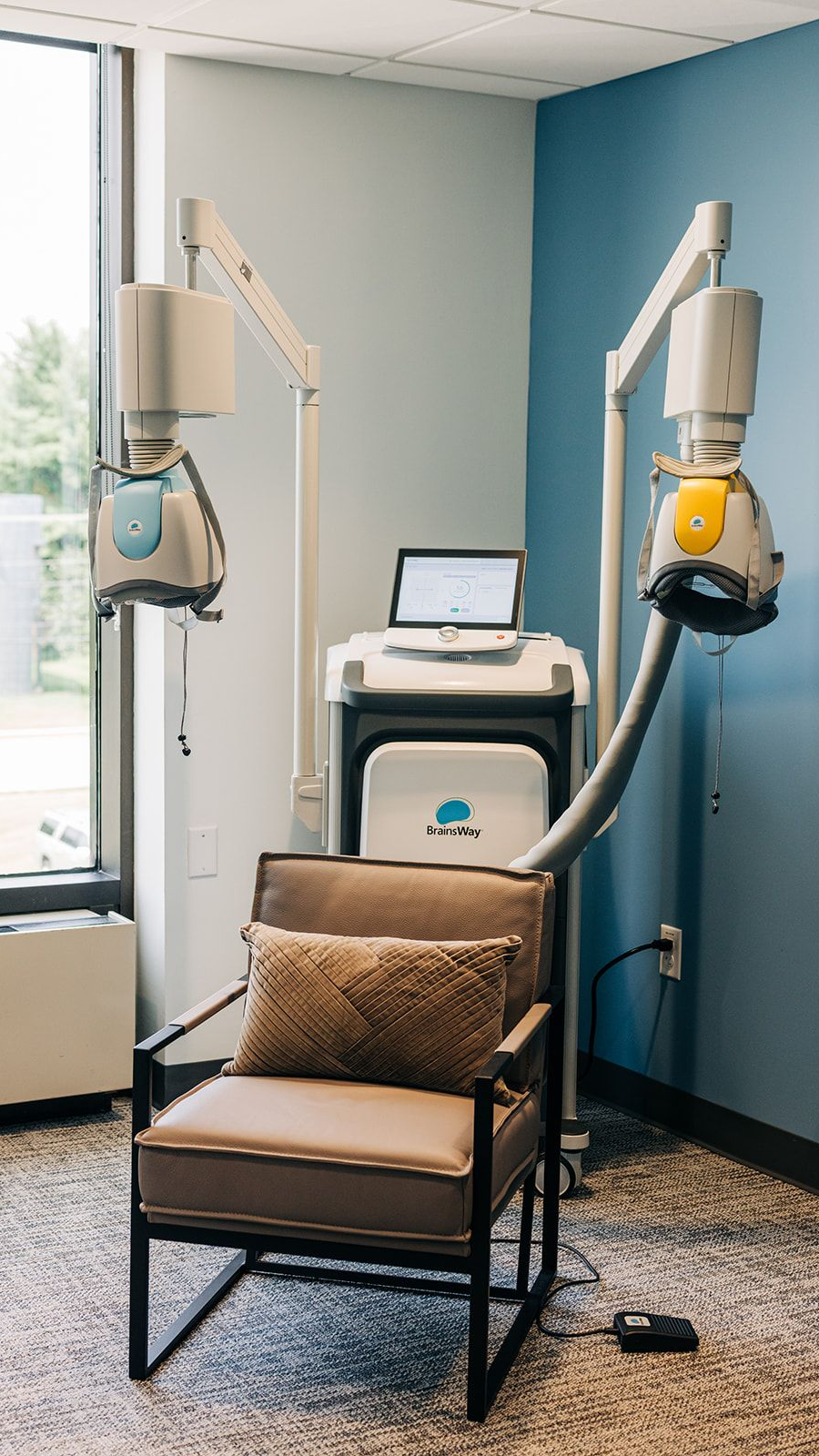
Transcranial Magnetic Stimulation (TMS) is an FDA-cleared, drug-free treatment, proven effective for treatment-resistant depression and OCD, when medications haven't worked.
TMS Benefits
- FDA-Cleared
- Non-Invasive
- No Anesthesia or Sedation
- Minimal Side Effects
- Outpatient (Drive Yourself Home)
- Insurance Accepted
The Benefits of TMS Explained
TMS treats depression without sedation and without recovery time. It works alongside or instead of medication, and the results often last long after treatment ends.
Dr. David Roth, Chief Medical Officer at Bluegrass Advanced Mental Health, explains what makes TMS a genuinely different option for people whose depression hasn't responded to medications or therapy - and why many patients stay better long after treatment ends.
Who does TMS help?
TMS is FDA-cleared for Major Depressive Disorder and OCD in adults and teens 15 and older.
If you or your teen has tried medication without meaningful relief, or wants a treatment that works alongside or instead of medication, TMS may be the right next step.
The TMS Process from Start to Finish
Step 1 - Initial Consultation
This is just a conversation. No commitment, no pressure, no jargon. We understand that no two people are the same, and everyone deserves an individualized treatment plan tailored to their specific needs. At Bluegrass Advanced Mental Health, we start with a comprehensive evaluation and tailor an individualized treatment plan including:
- Review of symptoms, history, and prior treatments
- Safety screening for TMS
- Discussion of expectations and treatment goals
- Determination of the most appropriate protocol
- Insurance review and cost transparency

Step 2 - Mapping
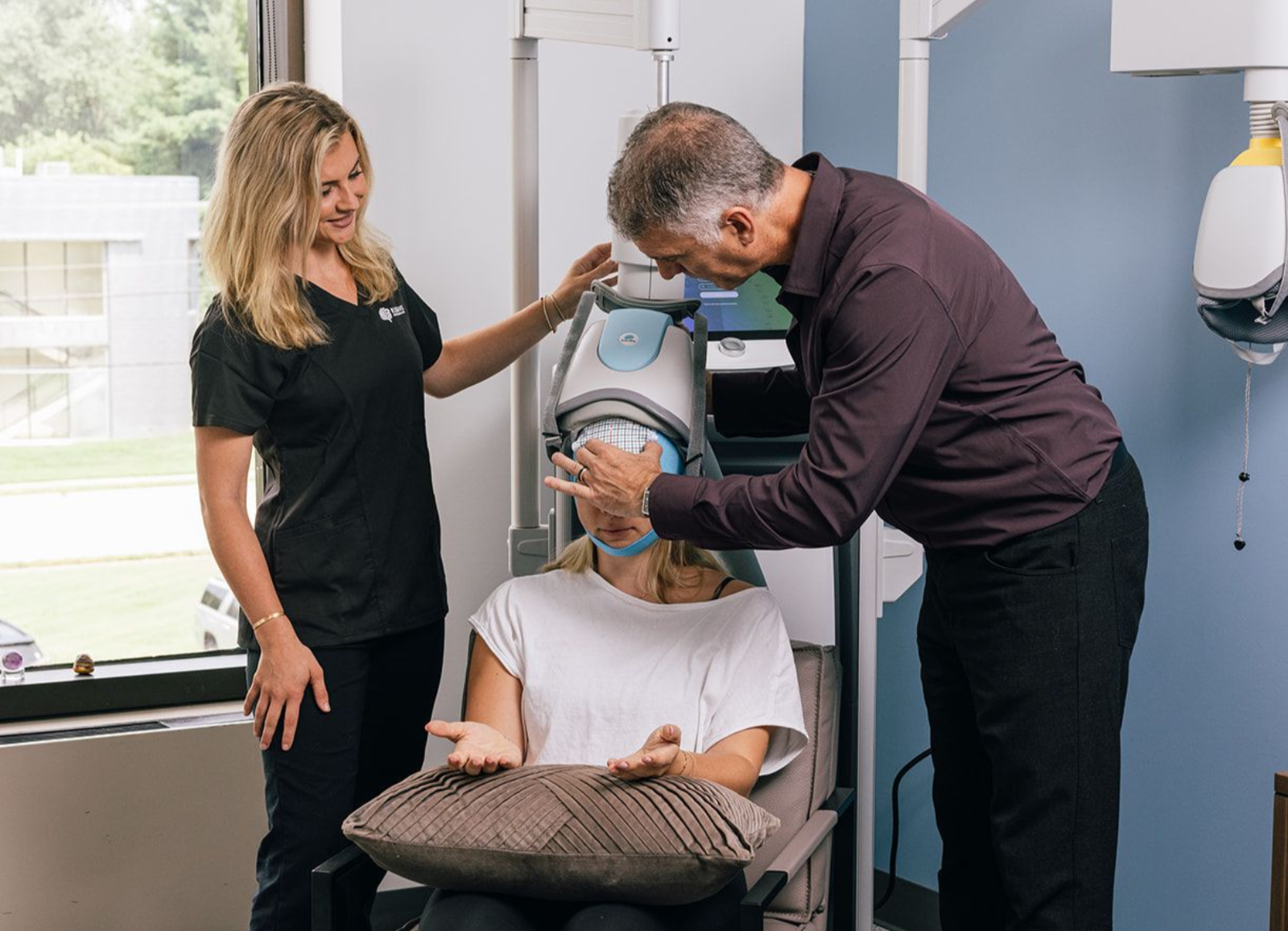
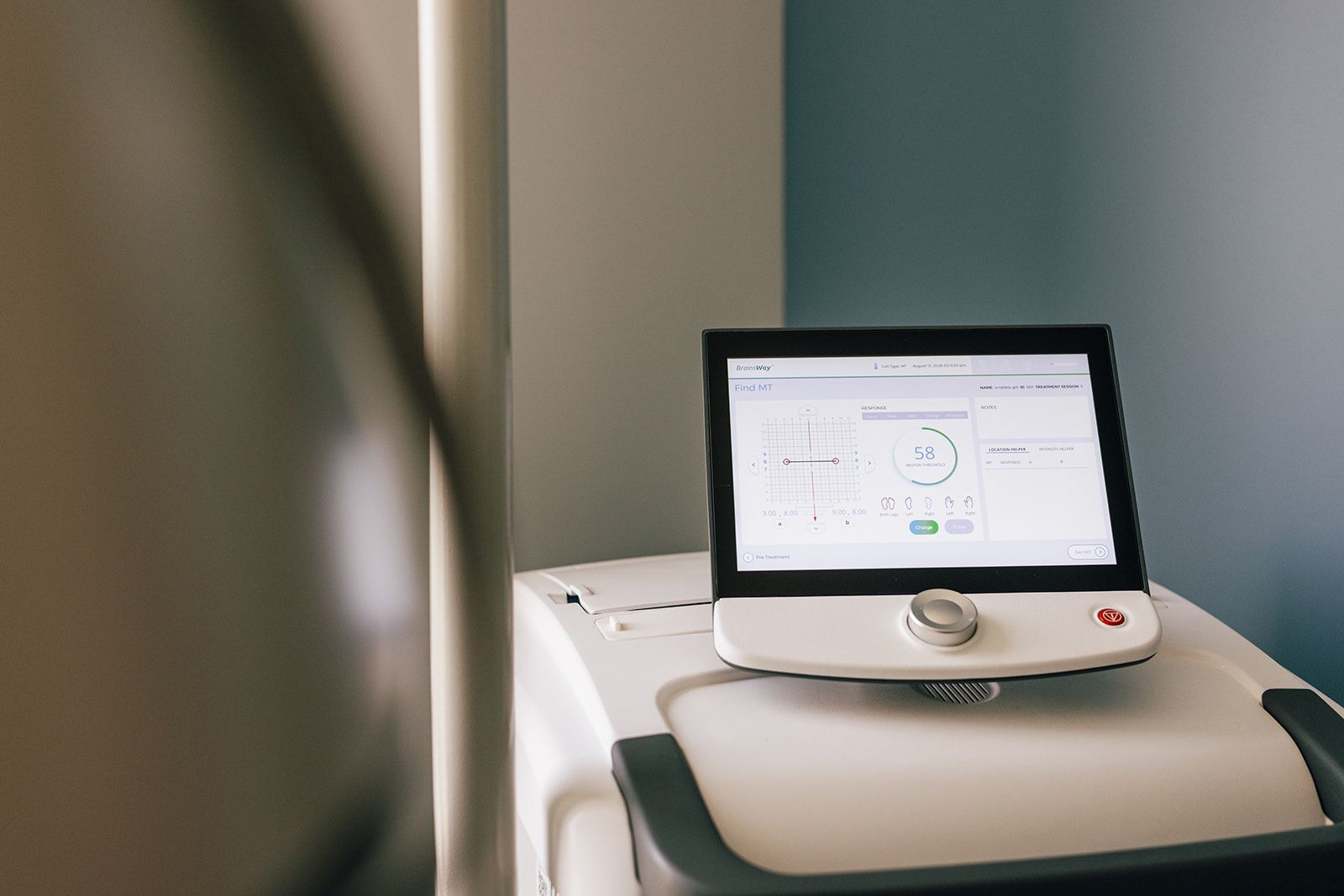
Your treatment is calibrated to your specific brain anatomy, not a one-size-fits-all setting. Before your first treatment, we run a brief mapping session - about 30 minutes, while we take precise measurements. This ensures every session that follows is tuned specifically to you.
- Identifying the precise treatment location on your scalp
- Measuring your individual motor threshold to set the right intensity - not too much, not too little
- Confirming comfort, fit, and readiness before treatment begins
Why mapping matters
"The stimulation threshold varies meaningfully from person to person. Getting it right at the start makes a huge difference."
- Dr. Roth
Step 3 - Treatment
Most patients begin to notice improvements within 2 to 4 weeks, although timelines vary.
- Acute phase: 5 sessions per week for 4 weeks, followed by a Continuation phase of 2 sessions per week for 8 weeks (totaling 36 sessions)
- During sessions you can listen to music, watch relaxing videos, read, meditate, or simply rest
- No sedation, no anesthesia. You drive yourself home and resume your day immediately
- Mild scalp discomfort in the first few sessions is common and typically fades quickly
What the research shows
- ~80% of patients experience improvement.
- Over 2/3 achieve complete remission.
- Better energy, improved sleep, & renewed motivation
* Source: BrainsWay Deep TMS real-world clinical data. brainsway.com/clinical-evidence
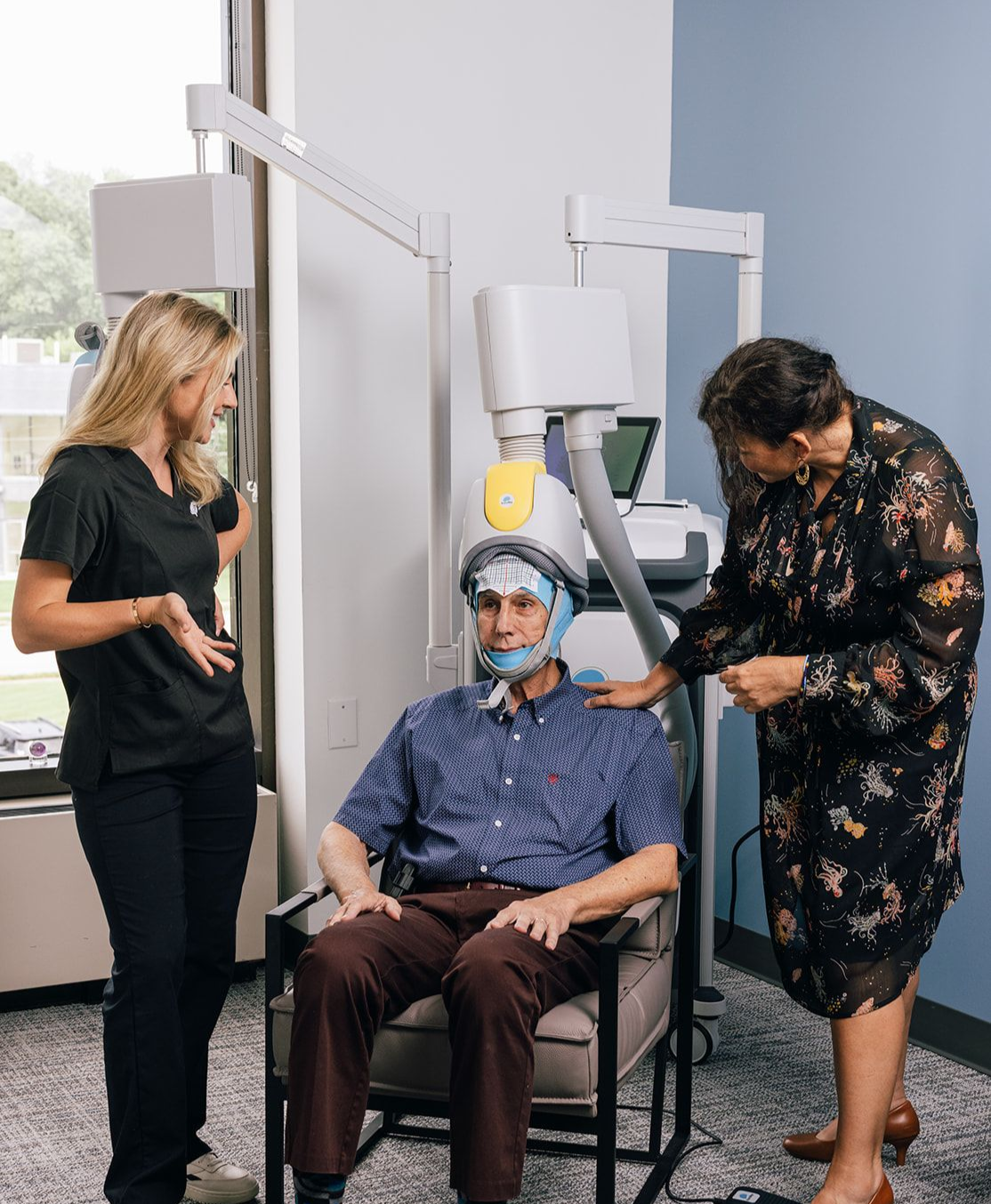
Step 4 - Monitoring
We don't set your treatment and walk away. We optimize it as you go.
- Regular check-ins using validated symptom measures to track your progress objectively
- Direct physician oversight
- Protocol adjustments made when the data or your experience calls for it
- Ongoing communication with your existing care team if you have one
Step 5 - Maintenance
While many patients maintain improvement after one course of TMS, some benefit from ongoing maintenance care to sustain results long-term.
- Periodic check-ins to monitor symptom stability after treatment ends
- Booster sessions if symptoms begin to return (typically 1-2 sessions weekly for a brief period)
- Coordination with your existing therapist or primary care doctor for long-term support
- Discussion of when a full second course of TMS may be appropriate
- Insurance verification for maintenance or follow-up sessions
"We want you to leave treatment feeling like yourself again - and be confident you have somewhere to turn if you ever need it."
- Dr. Roth

The Bluegrass Advanced Mental Health Difference
At Bluegrass, every TMS course is closely overseen by our providers. Your protocol is customized and your progress is monitored. Your care is never on autopilot.
Mental Health Care That Works With Your Insurance
TMS and Spravato (esketamine nasal spray) are covered by most major health insurance plans when criteria are met. For patients who are out-of-network or who want accelerated TMS treatment, third-party financing may be available.
A 5-minute screening tells you if TMS or Spravato may be a fit, verifies your insurance coverage, and connects you with our Patient Care Team to schedule your first appointment.





Interested in a faster TMS solution?
Learn more about Accelerated TMS.
The same FDA-cleared protocol, completed in less time, with better results.
Standard Deep - TMS Frequently Asked Questions
Does insurance cover TMS?
A: Many insurance plans now cover TMS for depression when medications haven't worked. Our team will help verify your coverage and maximize your benefits. For accelerated TMS, please contact us for more information.
Does TMS hurt?
A: Most patients describe TMS as painless, though you may feel a light tapping sensation on your scalp during treatment. Some people experience mild scalp discomfort or a slight headache during the first few sessions as your body adjusts, but this typically subsides quickly.
The sensation is often compared to a gentle woodpecker tapping—more unusual than uncomfortable.
Is TMS the same as electric shock therapy?
A: No! TMS is completely different from electroconvulsive therapy (ECT), commonly known as shock therapy.
ECT uses electrical currents to induce seizures and requires anesthesia, while TMS uses targeted magnetic pulses that don't cause seizures or require sedation.
With TMS, you're awake, comfortable, and can return to your day immediately after treatment. There's no memory loss or recovery time.
Can I stay on medications?
A: Absolutely. Most patients continue their current medications during TMS treatment. In fact, many people find TMS enhances the effectiveness of their existing medication regimen.
We'll work closely with your prescribing physician to coordinate care. Some patients are eventually able to reduce or discontinue medications after successful TMS treatment, but that decision is always made collaboratively with your healthcare team.
What if I can’t commit to daily sessions for 4 weeks?
A: Talk to us about Accelerated TMS or a hybrid schedule. We will help you balance efficacy, cost, and logistics.
Can TMS treat anxiety or ADHD?
A: BrainsWay Deep TMS is FDA-cleared for major depressive disorder, treatment-resistant depression, and OCD. It is not FDA-indicated as a primary treatment for generalized anxiety disorder or ADHD.
Bluegrass Advanced Mental Health offers comprehensive psychiatric care, including medication management, for patients with anxiety, ADHD, and related conditions outside the interventional service line.
How long is each TMS session?
A: Standard Deep TMS sessions are typically 18 minutes of active treatment, with about 10-15 additional minutes for setup and check-in.
Most patients are in and out of the clinic in under 45 minutes per session.
When will I notice an improvement with TMS?
A: Most patients notice changes within 2 to 4 weeks of starting treatment, though timelines vary. Some patients report improvement earlier, others later in the course.
Your treatment team will monitor your progress with validated symptom measures throughout the course to track changes objectively.
How long do the effects of TMS last?
A: Many patients maintain improvement for 6 to 12 months or longer after completing a course of TMS. Some patients benefit from maintenance sessions or a second course if symptoms return.
Long-term outcomes depend on many factors, including your specific condition, response to the initial course, and ongoing mental health care.
What happens after I finish TMS? Will my depression come back?
A: Many patients maintain improvement for 6 to 12 months or longer after completing a course of TMS. Some patients benefit from maintenance sessions or a second course if symptoms return.
Long-term outcomes depend on many factors, including your specific condition, response to the initial course, and ongoing mental health care.
Compare Treatments
A side-by-side look at TMS, Spravato, medication, and therapy - who they help, how fast they work, and what to expect.
Is TMS Right For Me?
A quick self-screen to see if TMS might fit your symptoms, prior treatments, & medical profile.