Dr. Roth on KET: What's New in Psychiatric Treatment
Medically reviewed by: Dr. David Roth, MD, DFAACAP, FAPA, FAAP
November 16, 2026
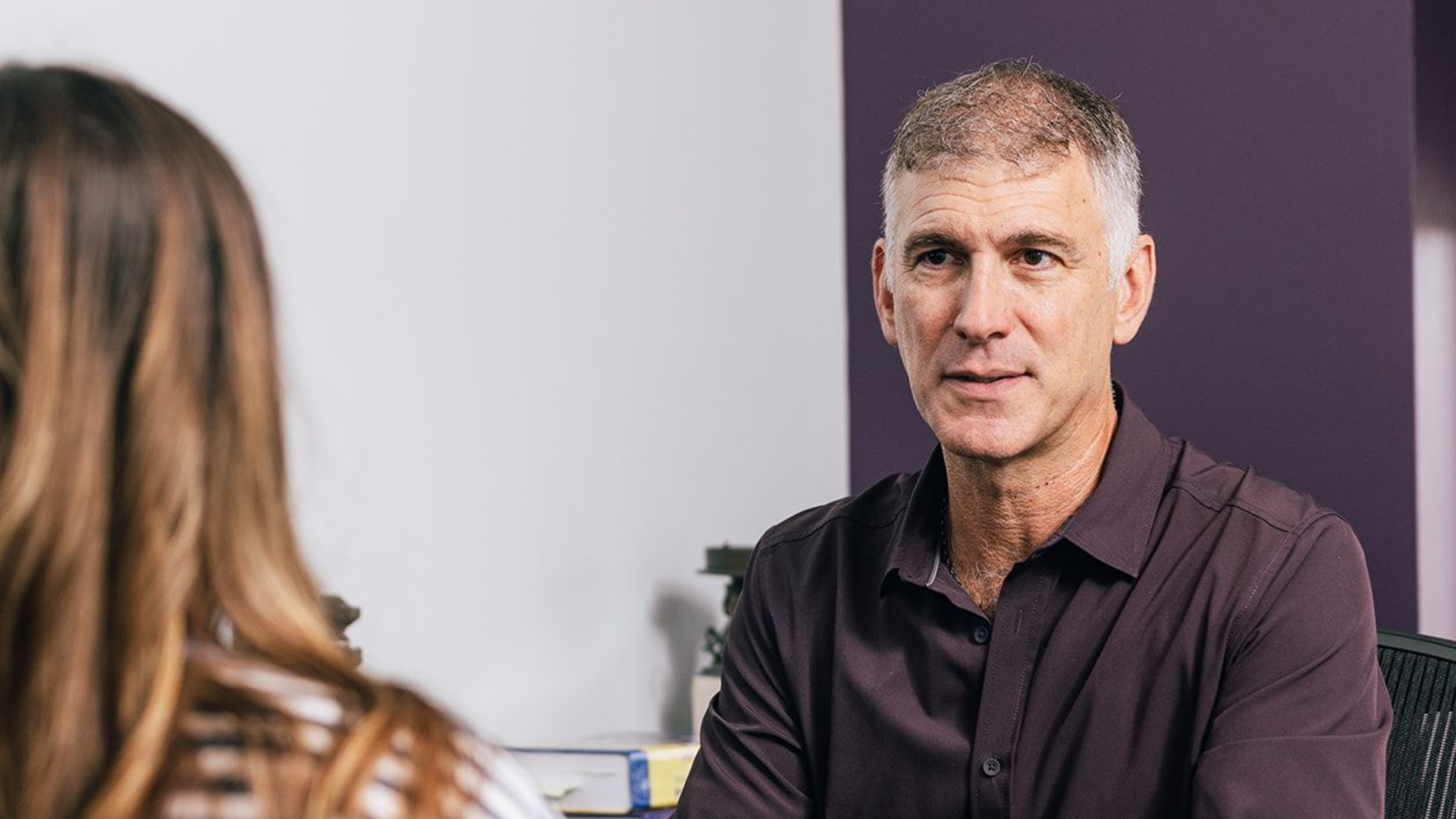
On the November 1, 2026 episode of KET's Kentucky Health, host Dr. Wayne Tuckson talked with Dr. David Roth, MD, founder and Chief Medical Officer of Bluegrass Advanced Mental Health, about what's new in treating mental illness.
They covered why depression is more than a chemical imbalance, how Spravato and TMS work, the truth about ECT, and where psychedelic research is headed.
Key takeaways
- Mental illness is common and rising, especially in young people. Dr. Roth points to better diagnosis, more stress, and the loss of social connection during Covid.
- Depression is not simply a chemical imbalance. Dr. Roth describes it as brain networks falling out of sync, and treatment as restoring the brain's executive network.
- Spravato (esketamine) works on a different brain pathway than traditional antidepressants. Treatment starts twice a week for four weeks and works best alongside psychotherapy.
- ECT is safe and effective despite its Hollywood reputation, but it requires anesthesia and can cause memory loss. TMS fills the gap between medication and ECT.
- Accelerated Deep TMS can finish its intensive phase in about two weeks, and Deep TMS is also FDA-cleared for OCD in adults. Dr. Roth's message: there are more options than ever, so don't give up hope.
Originally aired on Kentucky Health, KET, November 1, 2026. Shared with permission.
Frequently Asked Questions
Who is Dr. David Roth?
A. Dr. David Roth, MD, is the founder and Chief Medical Officer of Bluegrass Advanced Mental Health in Louisville. He is triple board-certified in adult psychiatry, child and adolescent psychiatry, and pediatrics, with 25 years in practice.
What is the difference between TMS and ECT?
A. ECT uses a brief electrical current under general anesthesia to cause a controlled seizure, and it can cause memory loss. TMS uses magnetic pulses while you are awake, with no anesthesia or seizure, and you can drive yourself home. ECT is usually considered when depression is severe or has not responded to other treatments.
Does Bluegrass Advanced Mental Health offer psychedelic-assisted therapy?
A. No. LSD, psilocybin and MDMA are still being studied and are not FDA-approved for these uses. We offer Spravato, an FDA-approved esketamine nasal spray, given in our REMS-certified clinic.
Where can I watch the full Kentucky Health episode?
A. The video is above, and the full episode is also on KET's website.
This transcript reflects the conversation as it aired and has been lightly edited for readability. Psychedelic-assisted therapies discussed in the episode, such as LSD, psilocybin and MDMA, are not FDA-approved for these uses and are not offered at Bluegrass Advanced Mental Health.
Editor's note: Spravato is FDA-approved to treat depressive symptoms in adults with major depressive disorder who have acute suicidal thoughts or behavior. It has not been shown to prevent suicide. See the prescribing information. Statistics quoted in conversation may differ from published figures; see our Compare Treatments page for sourced numbers. Individual results vary.
Read full transcript
Dr. Wayne Tuckson: The movie One Flew Over the Cuckoo's Nest either jaded us or revealed secrets as to how mental illnesses were treated. Stay with us as we talk with psychiatrist Dr. David Roth about what's new in the treatment of mental illness in 2026. Next, on Kentucky Health.
Announcer: Kentucky Health is funded in part by a grant from the Foundation for a Healthy Kentucky.
Dr. Wayne Tuckson: The incidence of mental and behavioral illness is on the rise in the United States. This is especially true in adolescents. One in five adults and one in seven children will experience an episode of mental illness within a given year. Over a lifetime, there is a near 50% chance that someone will have at least one diagnosable mental health episode.
Though the numbers of patients getting treated have risen, unfortunately, large numbers of adults and youths are not getting needed treatment. Psychotherapy, medications and surgery, alone or in combination, are beneficial. But utilization has been limited by patient reticence, social stigma, cost, access, lack of awareness of treatments, and fear of complications, side effects and concerns about quality of life during and after treatment.
Today, our guest, Dr. David Roth, will tell us about how non-medical treatments such as transcranial magnetic therapy, and even LSD, are benefiting patients with mental illness.
After graduating from the University of Louisville School of Medicine, Dr. Roth completed a residency in pediatrics, psychiatry, and child and adolescent psychiatry at the University of Hawaii. He is now a practicing psychiatrist and president and chief medical officer of Bluegrass Advanced Mental Health.
Dr. Roth, David, thank you very much for being with us.
Dr. David Roth: Thank you for asking. I appreciate it.
Dr. Wayne Tuckson: So what was your moment that you wanted to be a doc?
Dr. David Roth: Well, I grew up in a medical family, so it was kind of a matter of steering back toward it, because everyone was like, "Oh, are you going to be a doctor just like your dad?" And every kid's like, "No, I'm going to be my own person." But I have a lot of the same traits, a lot of the same interests, and gradually I ended up falling in love with the profession.
Dr. Wayne Tuckson: So somewhere out there, there's a kid who thinks, "I want to be," as I remember from an old Charlie Brown cartoon, "a psychiatrist." A kid wants to be a psychiatrist. How do you get into that?
Dr. David Roth: You get into it because you're one of those people who likes to sit down and talk with your friends about their problems and brainstorm solutions.
I remember being in the dorm at 1:00 in the morning, sitting by the door with a friend, trying to talk them through a difficult time, and helping another one get to the hospital when they needed it. Sometimes you just find yourself drawn to caring for people in that sort of situation, and then it's a logical extension to get better and better skills to help more and more people with more and more complex situations.
Dr. Wayne Tuckson: Do we have enough people doing what you do right now?
Dr. David Roth: Heck no. Unfortunately, we don't.
Dr. Wayne Tuckson: And that is a sad thing. I mentioned that the numbers seem to be rising. Do you see that? And what could be a possible explanation?
Dr. David Roth: A lot of different explanations seem to be adding together. One is there's better understanding of mental illness, so people are finding it, diagnosing it and calling it what it is more easily, rather than seeing people as lazy or just down, or misunderstanding it as a personality trait.
Secondly, the stressors of the world are not getting less. If anything, they're getting more.
And we saw Covid take a huge chunk of our developing population, kids, adolescents and young adults, out of social connection. That had a very big impact on the development of their academic skills, social skills and social connectedness. We know all of those things contribute to mental health, so a greater negative impact on mental health occurred as a result of Covid.
Dr. Wayne Tuckson: Is there a difference in the presentation, or even long-term outcomes, of adults presenting with a mental illness versus adolescents? I know it's going to vary by the type.
Dr. David Roth: Oh, absolutely. When an adolescent presents with depression or bipolar disorder or even schizophrenia, usually that condition is going to be more severe and possibly more long-lasting than in someone who has been mentally healthy for 20 or 30 or 40 years and then has an episode of mental illness.
Secondly, if a young person is interrupted in their development and misses out on school or soccer teams or engaging in their education, they're going to be at a loss for economic, social and personal development. So it has an even greater impact on them and keeps them out of the socioeconomic determinants of good health.
Dr. Wayne Tuckson: That's interesting. I use the term mental illness, but there's obviously a lot contained in there. The diagnostic code book you use alone is bigger than the average encyclopedia, for those who remember encyclopedias.
What are some of the major classifications when we talk about mental illness?
Dr. David Roth: Sure. The book was actually developed so that all of us would speak the same language. Originally it was simply agreed-upon definitions, so that when you saw somebody struggling and I saw the same person, we would use the same name for their struggle.
Over the years after World War II, that became more and more research-based: could we clinically distinguish X versus Y in a reliable way and all agree on it? At this point, we have a book that's divided into chapters based on the type of illness. So you have depressive illness, bipolar disorder, psychotic disorders where we're not able to think clearly, personality disorders, and then impulse control disorders like OCD.
Dr. Wayne Tuckson: What is bipolar?
Dr. David Roth: Bipolar is when you have two different extremes of mood. You have one pole of depression: low, sad, lack of energy and motivation. On the other pole you have extreme energy, excitement, motivation and industry.
Some folks will have a predominance of depression with occasional manic episodes. Some people are unfortunate enough to have them mixed at the same time. It's a very difficult illness to treat because it's lifelong and it fluctuates in its presentation, between the down, the up, and an in-between irritable, not-so-great feeling.
Dr. Wayne Tuckson: Does a problem like schizophrenia fit into that, or is that in a whole different category?
Dr. David Roth: That's in the psychosis category. That's where people lose the ability to logically process the world around them and handle external stimuli in a reasonable way. They get overstimulated, often losing the ability to care for themselves and manage their own affairs.
Dr. Wayne Tuckson: Is that more common in younger people or older people, or can you see it either way?
Dr. David Roth: It tends to present in the early 20s. It does happen in adolescence, but it's far more common to present in the young adult years.
Dr. Wayne Tuckson: When you talk about treatment, we sometimes hear about psychotherapy. What is that, and who benefits from it?
Dr. David Roth: Psychotherapy is an organized way of talking with someone to help them with their mental illness. It's a step up from what we would do for a friend, or the advice you might get from a bartender or a hairdresser, someone who cares about you and lends a sympathetic ear.
The concept of psychotherapy is that there are ways to understand how the brain works and how that shows up in thought patterns, emotional patterns and relationship patterns. When we understand the dysfunctional patterns a person is stuck in, we can guide them in forging new patterns, replacing the dysfunctional ones with more functional patterns that lead them into the life they would rather create, rather than the life they've been stuck in.
Many times those patterns are set in childhood. If you have an alcoholic parent, you adapt to their behavior, but that adaptation may not serve you if your partner in life is sober. You may have suffered tremendous abuse and neglect as a child and have a very defensive, easily triggered anger response. That kept you from being victimized as a kid, but maybe it doesn't serve you well when you're out in public trying to negotiate with a car salesman. Some of these patterns may have been adaptive for an early childhood experience, but we carry them with us, and they interrupt the positive experiences we want to be having in the here and now.
Dr. Wayne Tuckson: That's interesting, because you're suggesting we're reacting to external stimuli. What about chemical imbalances? Can they also give rise to a mental illness?
Dr. David Roth: We used to think that depression, anxiety and other disorders were due to a chemical imbalance in the brain. People are used to hearing, since the age of Prozac in the early '80s, that we have a serotonin deficiency, or norepinephrine, or dopamine.
Those neurotransmitters do have a very important role in brain functioning, but they're the regulators of brain functioning, not the primary drivers. If you think of the brain as a traffic grid, they're the stop signs, yield signs and traffic lights that guide traffic along and make sure we don't have traffic jams during rush hour. When those aren't working right, we try to adjust them. But it turns out that's really not how depression works, and it's not how anxiety works.
What we actually have are networks that connect different areas of the brain. There are six dominant ones, and they're supposed to work in concert. Think of an orchestra, where you have a conductor, the brass section, the woodwinds and the strings. If the brass is playing New Orleans jazz and the strings are playing Tchaikovsky, you're not going to have a performance worth noting. It's going to be cacophonous. What happens in depression or anxiety, and often in addiction, is that one of those networks is out of governance, so the brain isn't functioning harmoniously.
What we need to do is restore the dominance of the executive network over the other networks, so the conductor is back where they belong, running the orchestra of the brain.
Dr. Wayne Tuckson: Very interesting. I'll never listen to a symphony the same way again. Tell me about mood-altering drugs, antipsychotics and antidepressants. Are they the same thing, or do they work differently?
Dr. David Roth: That's about as big an encyclopedia as the one you mentioned a minute ago. We have a lot of tools in our tool chest.
There are the drugs of abuse that many people are aware of, and we have pharmaceutical-grade drugs used to treat specific conditions. In psychiatry, we have medicines that help depression, like antidepressants that are serotonin- or dopamine-based. You have anti-anxiety medicines that work on the GABA system, the same system alcohol and marijuana affect, along with specific receptors like the endocannabinoid receptor. That's why those things work: they work on our own systems.
So we have medicines that work on those different systems, and we have a lot of options. But unfortunately, most of them aren't very strongly effective.
Many people experience depression, unfortunately a growing number in our population. Estimates of the current treatable market are about 2.3 billion, and it's expected to grow to 3.6 billion in ten years. These are folks being treated for depression, and it's not even working. So we have a growing number of people for whom the medicines they're used to aren't really cutting the mustard.
Dr. Wayne Tuckson: A drug that has been around for a while is ketamine. Tell me about how it's being brought back into use. And what is Spravato?
Dr. David Roth: Spravato.
Dr. Wayne Tuckson: Spravato. I'm sorry.
Dr. David Roth: Potato, potato. What's fun about ketamine: this is the nasal form of ketamine that Janssen Pharmaceuticals delivers, called Spravato.
Ketamine itself has been around for many years. It's something we've used in pediatrics for anesthesia, so it's a well-known, well-tolerated, safe medicine when it's used properly. Unfortunately, cases like Matthew Perry's demonstrate the risk of misusing something that is safe and effective when used properly. Although that's given ketamine some bad press, it's also drawn attention to the good use of prescribed ketamine, and it does make a difference.
It works on a different pathway than the typical neurotransmitters. Ketamine, and the nasal form, esketamine, work on the NMDA receptors on glutamate neurons. These are the roads in the traffic grid. So instead of managing the traffic lights with Prozac, we're fixing the potholes and helping the brain build new roads, maybe even a new expressway. That's how it helps restore functioning, reduce depressive symptoms and even put depression into remission.
Dr. Wayne Tuckson: This is nasal?
Dr. David Roth: A nasally absorbed version of ketamine.
Dr. Wayne Tuckson: How often does a person take it?
Dr. David Roth: It's unusual compared to normal medicines. What we want to do is get up to a stable level, so we do two treatments a week for four weeks. That induction phase should, if a person responds, lower their depression by 50% or more. Then we switch to once a week for a couple of months to see if we can get it even better.
Some patients are then able to stop because their depression has responded adequately. Others stay on it every one to two weeks because nothing else has helped their depression respond adequately.
Dr. Wayne Tuckson: This is probably something I'll ask again, but is this combined with psychotherapy?
Dr. David Roth: As a matter of fact, it's best with psychotherapy. There are three things ketamine does. The first part is the trip. The trip experience lasts about 45 minutes, and we have a special area where people relax in a chair and experience that.
We prepare them so they have the right mindset. They come into it with an intention and can explore the psychedelic experience, which is mostly dissociative. You turn off the chatter in your brain, you step away from yourself, and it's quiet.
Most people don't have visions or hallucinations. That trip can be insightful, and you may learn something. But if it were just about the trip, every kid who goes to Burning Man or Coachella would come back cured, and that's not the case.
The second thing is that it has a very potent antidepressant and anti-suicide effect. It turns off the switch, even after a single treatment.
Dr. Wayne Tuckson: Wait a minute. Anti-suicide?
Dr. David Roth: That's correct. It's one of the indications for getting this covered by insurance.
Dr. Wayne Tuckson: Really?
Dr. David Roth: Really. That antidepressant effect lasts for a few days or up to a few weeks, but it invariably fades with time, which is why people have to keep doing it. But the real magic is that it's the WD-40 for psychotherapy.
It makes real change much easier and much faster. If you have your mind set to be different, if you want to see the glass half full instead of half empty, and you work on that under the influence of this medication, you can actually change your mind and change your brain. The wiring is different afterward. The neural networks change, the thinking changes, and that change is permanent.
Dr. Wayne Tuckson: Then I have to ask you, since you mentioned the psychedelic effect, about LSD. Folks my age, at least, will recall "tune in, turn on" with LSD. But you're suggesting there are new uses for it.
Dr. David Roth: LSD is one of the psychedelics that has gotten a lot of attention. The struggle we've had with traditional psychiatric medications, being effective but not effective enough or durable enough, finally unlocked more research into psychedelics.
It was really driven by veterans dying by suicide, and that's what led to medical marijuana and other pushes into things that had been illegal since Nixon changed the law in 1971. There's been a push to save lives because of the limitations of regular medicines and regular therapy. Even done the best way by the best people, our veterans were dying, and other people were dying. That was the call to action.
So finally, the government allowed more research, and that research has now been going on for over ten years. It's amazing how many agents are under study and moving toward the market. Spravato was really the first of the psychedelics to come through, but starting next year we'll see more of them become available, and over the next five years, dozens will likely become available.
Dr. Wayne Tuckson: Again, with psychotherapy?
Dr. David Roth: With psychotherapy as part of it, and a lot of governance. There will be certain ways it's done, in qualified centers, and it has to be done right. To my point, the trip isn't everything. Traditionally, the trip was done with a proper guide, a shaman.
These things were never meant to be party drugs, although they function in that role. Their original purpose was always to create significant change in people, often victims of war or warriors, because they often treat depression and PTSD very well. And you're going to see LSD, which is the most effective treatment for alcoholism we've ever seen.
Dr. Wayne Tuckson: I think that would be a slam dunk.
Dr. David Roth: It's a slam dunk. So we're going to see a lot changing with psilocybin, LSD, MDMA, ayahuasca and DMT. These are things relegated mostly to drug abuse right now, but when done properly, they are therapeutic.
Dr. Wayne Tuckson: Interesting. I alluded to it somewhat tongue in cheek, but it's still real: when a lot of us think about psychiatric treatment, we think of electroconvulsive therapy. Before we come to that, I want you to tell me about transcranial magnetic stimulation, how it differs and what's really going on, because you've brought this wonderful thing with you.
Dr. David Roth: I've got to share it. But let me deal with the 800-pound gorilla in the room first. Electroconvulsive therapy is something we've had for over 100 years. It's scary because it got a bad rep. It had a really bad Hollywood agent, which is why it got a bad role in a movie: a great movie, but a bad role, where it was misused as a torture device on the patient.
ECT is actually extremely safe and effective. For treatment-resistant depression, there's a 95% chance of a person responding and a 90% chance they go into remission. For catatonia, a locked-in condition that almost nothing treats, there's a 90% chance of a significant effect. [Editor's note: Published ECT response and remission rates vary by study. See our Compare Treatments page for the figures we use.] So it really is one of the most effective treatments we have, with a very bad rep.
It does have consequences, like memory loss. It's expensive. It has to be done in an outpatient surgery setting, where you're paralyzed and sedated under anesthesia. So it's a big deal.
Dr. Wayne Tuckson: But tell me about transcranial magnetics.
Dr. David Roth: That's why I wanted to bring it up. In psychiatry, we always needed something in between regular medications, which didn't work great, and ECT, which worked great but wasn't something we wanted to give everybody all the time.
We needed something in the middle, and that's where TMS came about. TMS is a very simple concept. Everybody has a phone charger or an electric car or an electric toothbrush. Same electrical principle: power comes into a magnet, the magnet creates a magnetic field, you put something like your phone parallel to that field, and it induces electrical activity in your battery, recharging your phone. I do the same thing to the executive center of the brain to treat depression. The only difference is I've got a hell of a lot bigger magnet.
Dr. Wayne Tuckson: This is public television. You just ruined it for us. But go ahead.
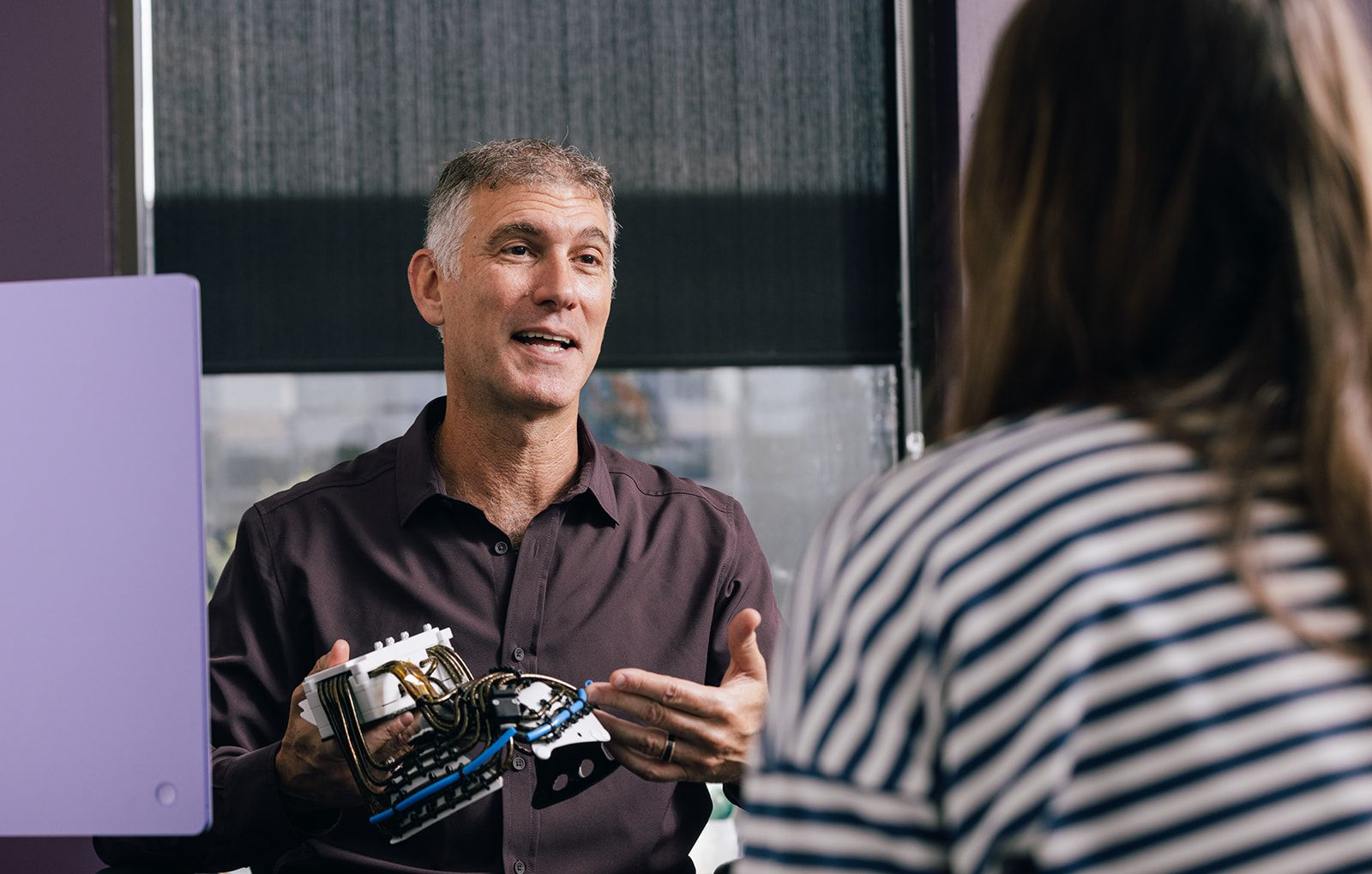
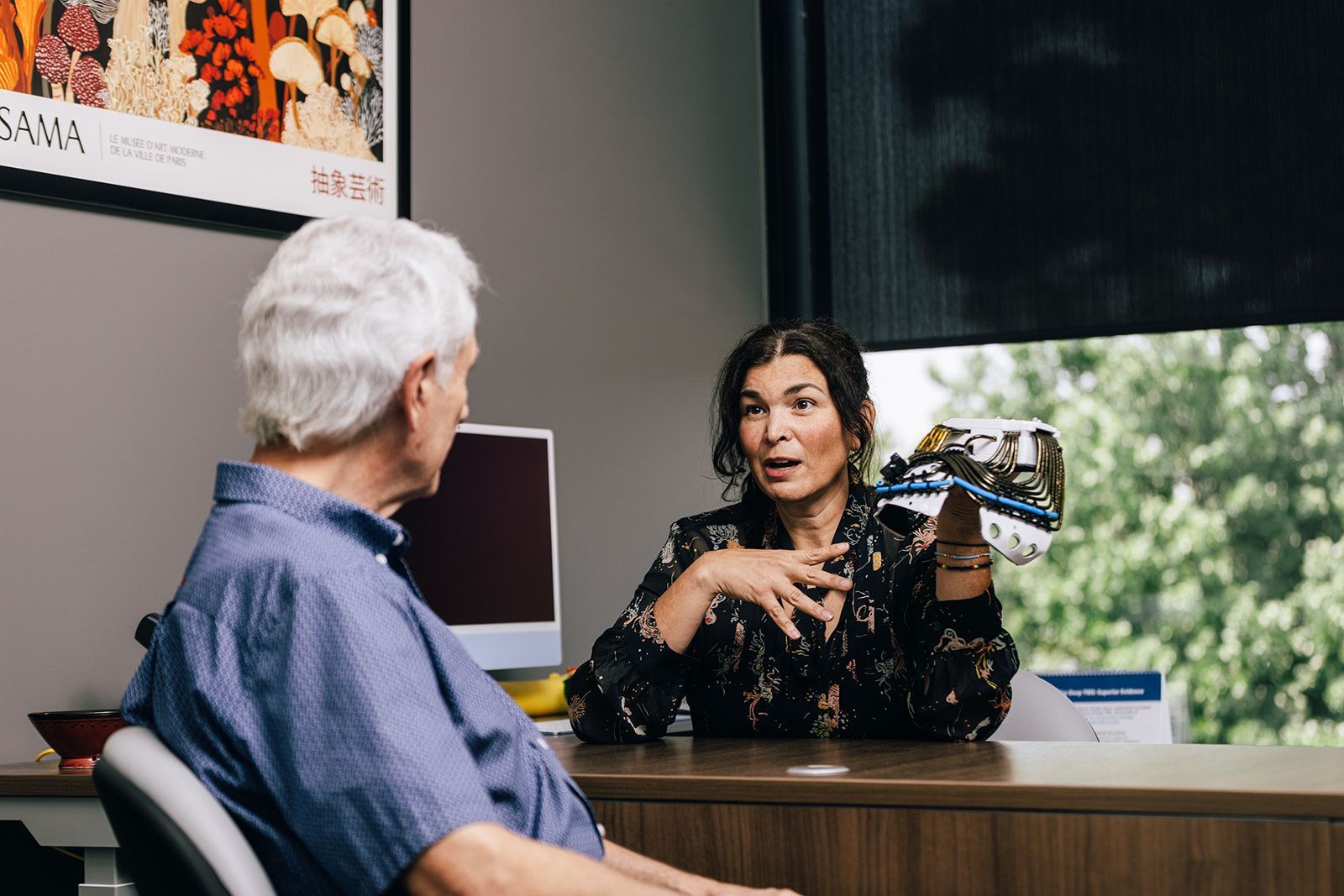
Dr. David Roth: Sorry. The kids can't watch it anymore. This is a magnet that goes to the next level of technology. The original TMS technology was literally two of these together, creating a deeper, more powerful field, and many of the machines on the market today have that technology.
BrainsWay developed this to treat soldiers in Israel who were getting concussions, traumatic brain injuries, depression and PTSD from their wartime service. They went back to the books and redesigned the science. This has multiple magnetic coils that create a deeper, stronger field, and this is the guts of what ends up treating a patient. It's covered by a helmet and attached to a machine that keeps it cool. It delivers the magnetic field to the brain, inducing your own electrical activity. In the accelerated TMS models, we can get depression to respond, meaning symptoms drop by 50% or more, 88% of the time, no matter how many medicines you've failed or how long you've had depression, and 78% of patients go into remission.
Dr. Wayne Tuckson: Do patients have to keep wearing this?
Dr. David Roth: No. They come in for 30 treatments, and in the accelerated model, we can do five a day. We get done in two weeks. People feel better at the end of the first week and much better at the end of the second week.
Then we have four little booster treatments, and they're done. I may never see them again, or I may see them in two or three years if they have another spell. [Editor's note: Deep TMS requires 8 continuation sessions over 4 weeks after the acute phase.]
Dr. Wayne Tuckson: Really? No other medications at this point?
Dr. David Roth: You can keep your meds, but you don't have to have meds. I've had patients whose other conditions, like diverticulitis, make it impossible to tolerate side effects from antidepressants, and they come in and come out not depressed.
Dr. Wayne Tuckson: So who's the patient this is for?
Dr. David Roth: If you want it covered by insurance, and all the insurance companies cover it, you have to have failed two or more medications at an adequate dose, and for many companies you have to be 18 or older. Some companies will cover it for 15 and up. [Editor's note: Coverage varies by plan. BAMH verifies your benefits before treatment starts.]
Dr. Wayne Tuckson: Is it just depression, or are we talking about psychotic or schizophrenic patients?
Dr. David Roth: Excellent question. Depression is where it got famous, but the other category is obsessive-compulsive disorder.
There's a slightly different design, where the magnet reaches a slightly different, deeper, more medial structure of the brain. Under the influence of that, you practice resisting your OCD: not washing your hands, not thinking about your boyfriend cheating on you, not checking whether the stove is off or driving back home to see if the stove is off. You practice resisting under the influence of the magnet. It's like practicing a spelling word 2,000 times. We do 2,000 pulses a day for 30 days, and the OCD gets at least 30% better in most people. [Editor's note: Results vary. Many patients see meaningful improvement in OCD symptoms; not everyone responds.]
Dr. Wayne Tuckson: Are you telling me that if you did this for an internist, we might actually get a real diagnosis?
Dr. David Roth: Or you might stop thinking about your patients at night.
Dr. Wayne Tuckson: I'm fascinated by one treatment. I mean, one course.
Dr. David Roth: One course of treatment, exactly.
Dr. Wayne Tuckson: Phenomenal.
Dr. David Roth: It's the most fun I've ever had in this field.
Dr. Wayne Tuckson: Is this available from all psychiatrists?
Dr. David Roth: No, very few of us, because the machines are expensive and you need specific training. There aren't a lot of us in town.
Dr. Wayne Tuckson: David, give me the one take-home point you think is important when thinking about mental illness and its treatments. What's different from when you started to where we are now?
Dr. David Roth: The core of good treatment has never changed: a good therapeutic relationship with your provider, someone you can trust, someone who can help you and has the tools for it. The take-home message, though, is that building on that, you have more options than we've ever had before. You may have been stuck with previous medications that didn't work, hospitalizations that didn't work, residential programs that didn't work. But there are reasons not to give up hope. You may have to do a little digging to find the person near you who can help, but there are newer, better treatments out there.
Dr. Wayne Tuckson: If you could travel back to 1975, what would you tell the producers and director making One Flew Over the Cuckoo's Nest?
Dr. David Roth: Torture Jack's character a different way. Don't ruin the reputation of one of the best tools we have in psychiatry. It doesn't come without complications and challenges, but it's still a wonderful tool, and it saves people from struggling, suffering, being miserable, or being detached from their families, their lives and their communities, because sometimes the medicines didn't work.
Dr. Wayne Tuckson: Well, David, thank you very much for being with us. I really appreciate you bringing that Iron Man helmet with you, and in all seriousness, I appreciate hearing about what's new out there.
Dr. David Roth: Thanks for having me.
Dr. Wayne Tuckson: And thank you for being with us today. I hope you have a better awareness of the treatment options and the potential benefits and roles each can play in managing mental illness.
If you wish to watch this show again, or watch past shows, please go to ket.org/health. I look forward to seeing you again on the next Kentucky Health.
In the meantime, if you have concerns or questions about suicide in particular, talk to your primary health care provider. If you have questions about your own mental illness, talk to them so you can be seen by a psychiatrist. There are treatments available.
See you next week on Kentucky Health.
Announcer: Kentucky Health is funded in part by a grant from the Foundation for a Healthy Kentucky.
Recent Posts