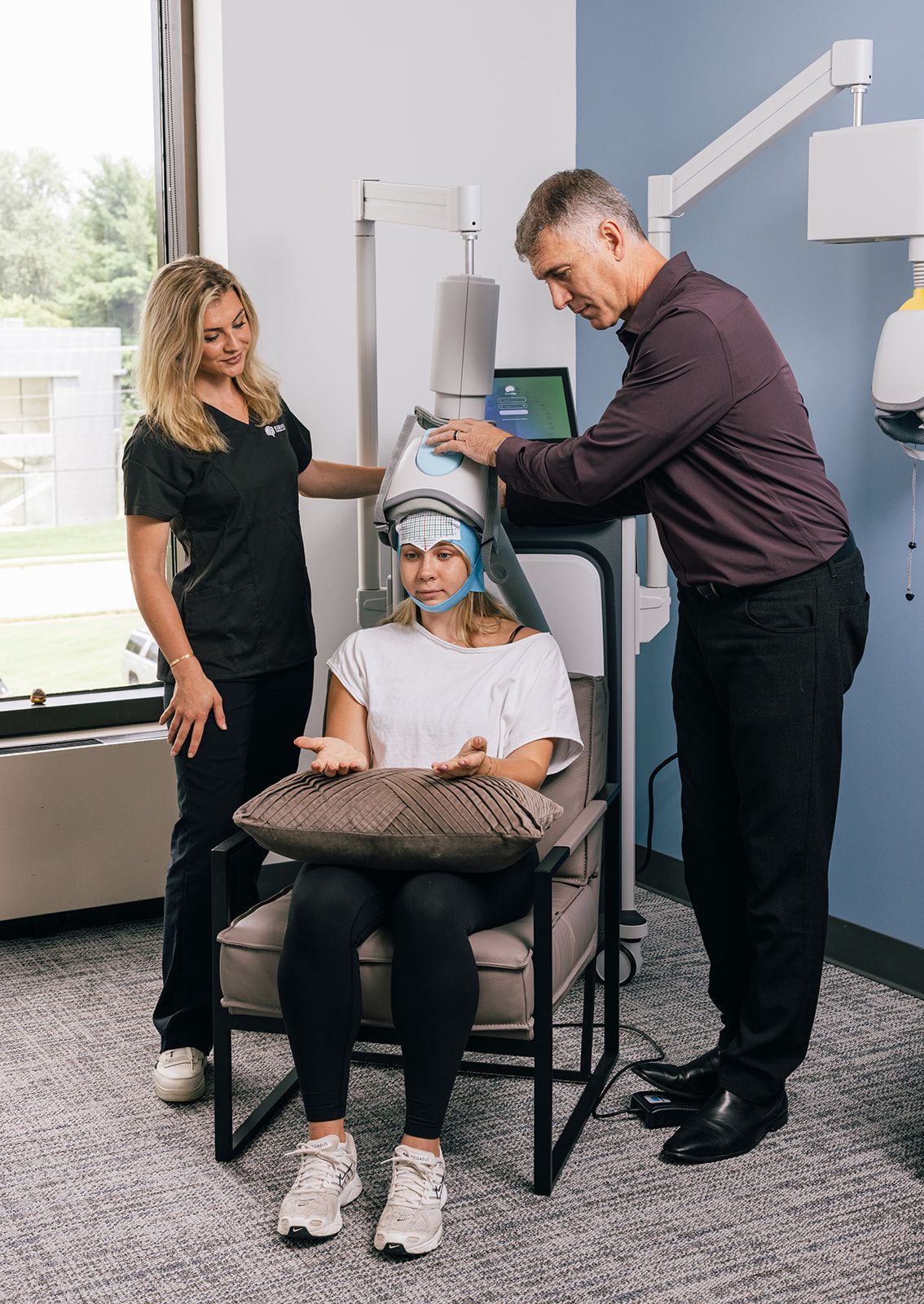
The honest answer is that TMS cost depends almost entirely on your insurance, not on the treatment itself. Most major plans, including Aetna, Anthem, Cigna, Humana, Medicare, TRICARE, and UnitedHealthcare, cover TMS for treatment-resistant depression when certain criteria are met. The treatment itself doesn’t have one fixed price. What varies is whether you’re paying in-network rates, out-of-network rates, or self-pay. Full details on coverage and payment options are in our
Pricing Guide.
What determines your out-of-pocket cost?
Whether you’re insured and in-network.
Covered patients typically owe a copay or coinsurance, not the full treatment cost.
Prior authorization requirements
Insurers typically require documentation that you’ve already tried at least two
antidepressants without adequate relief, though requirements vary by plan. This isn’t a cost driver directly, but it’s the gate that determines whether insurance pays at all.
What insurance requires before it covers TMS
Coverage isn’t automatic. Insurers generally want to see:
- A documented history of at least two antidepressant trials that didn’t provide adequate relief
- A documented attempt at psychotherapy, and ongoing impairment.
- A diagnosis of major depressive disorder, sometimes OCD depending on the plan
- Confirmation that TMS is being delivered by a supervising physician in an appropriate clinical setting
At Bluegrass AMH, this process doesn’t fall on you. Our team handles insurance verification, prior authorization, and qualification on your behalf from start to finish.
If you’re out-of-network or your plan won’t cover TMS.
Standard Deep TMS is only available through insurance. If you’re out-of-network or coverage is denied after an appeal, Accelerated TMS is available as self-pay for $7,500, with FSA and CareCredit financing accepted. We’ll go over the full cost with you before treatment begins.
Key takeaways
- TMS cost depends on your insurance status, not on a fixed treatment price.
- Most major insurers cover TMS for treatment-resistant depression when prior authorization criteria are met.
- Standard Deep TMS is 36 sessions over 9 weeks; Accelerated TMS is 38 sessions, with the intensive phase compressed into 6 treatment days.
- Bluegrass Advanced Mental Health’s team handles verification and prior authorization for you.
- If insurance won’t cover TMS, Accelerated TMS is available as self-pay, with FSA and CareCredit financing accepted.
Frequently asked questions
- Does insurance cover accelerated TMS the same way it covers standard TMS? Accelerated TMS is typically not covered by insurance at this time, as most insurers only reimburse the standard once-daily protocol. The all-inclusive cost is $7,500, which includes your evaluation, 38 sessions during treatment weeks, all follow-up visits, and free touch-up sessions within 6 months if needed. FSA dollars are accepted, and CareCredit financing may be available for eligible patients. We understand this is a significant investment, and your written cost estimate comes before anything is scheduled. Many patients find the shorter time commitment worth the cost.
- What happens if my insurance denies TMS coverage? A denial isn’t always final. Many denials are appealable with additional documentation, and our team can walk you through next steps, including self-pay and financing options if the appeal doesn’t succeed.
- Is a consultation itself covered by insurance? Your initial evaluation with Dr. Roth is typically billed the same way any psychiatric evaluation would be under your plan. Our care coordinator will confirm this specific to your coverage before you come in.
Ready to find out what TMS would actually cost you?
See If You Qualify
and our care team will verify your insurance and walk you through real numbers, not estimates.
If you're in crisis or having thoughts of harming yourself, call or text 988, the Suicide & Crisis Lifeline, anytime.